The Key Role of Estate Planning in a Successful Retirement Strategy
Posted on January 10, 2026 by shieldsandboris
Are you preparing for retirement? It can be a complicated and at times even overwhelming process. Estate planning is an important (and too often overlooked) aspect of retirement planning. At The Elder Law Offices of Shields & Boris, we are proud to be Western Pennsylvania's premier law firm for elder law and estate planning. It is our goal to ensure that you have access to the information that you need to do right by yourself and your family.
What is an Estate Plan?
An estate plan is a collection of legal documents that can be used to direct how a person’s property, finances, and personal affairs will be handled during incapacity and after death. At its core, an estate plan controls who receives assets, when distributions occur, and under what conditions. Beyond that, people also use their estate planning documents to direct decision-making authority if the individual cannot act for themselves. A properly drafted estate plan reduces uncertainty, helps to ensure your wishes are fulfilled, limits court involvement, and lowers the risk of disputes among family members. Every adult in Pennsylvania should have a comprehensive estate plan in place.
Why Estate Planning Plays a Key Role in a Successful Retirement Strategy
Retirement planning and estate planning serve different purposes. Retirement planning focuses on income, cash flow, and sustainability during life. Estate planning addresses control, protection, and transfer of assets during incapacity and at death. One does not replace the other. Instead, estate planning complements retirement planning by protecting what retirement planning builds. Here are three reasons why proactive estate planning is key to a successful retirement strategy:
- Asset Control During Incapacity: The reality is that you always need to prepare for the risk of temporary (or permanent) incapacity. A successful retirement strategy assumes the retiree remains able to manage finances and make decisions. That assumption does not always hold. An estate plan establishes powers of attorney and healthcare directives that authorize trusted agents to act if capacity declines. Without these documents, families may need court intervention to manage accounts or make medical decisions.
- Tax Issues: Retirement accounts, investment portfolios, and real property often represent a lifetime of accumulation. Estate planning coordinates beneficiary designations, trust structures, and distribution timing to reduce unnecessary tax exposure and administrative friction. Poor coordination can trigger avoidable income taxes, accelerate distributions, or defeat long-term planning goals. A well-integrated estate plan supports a retirement income strategy by preserving assets for a person and their intended beneficiaries.
- Protection From Conflict: Estate planning reduces the risk of serious conflict. Notably, retirement planning often assumes a stable family structure. Estate planning prepares for stress. Clear instructions reduce disputes among heirs, surviving spouses, and blended families. Trust-based planning can protect a surviving spouse while preserving assets for children. These protections prevent litigation that drains retirement-era wealth. You do not want to risk that could undermine your financial security later in life.
Key Components of an Estate Plan in Pennsylvania
A strong estate plan is a comprehensive estate plan. You need to develop an estate planning strategy that is focused on ensuring that you and your family have the proper protection leading up to retirement, during retirement, and beyond. Here are some of the key components of a successful estate planning strategy for retirement in Pennsylvania:
- Last Will and Testament: Every adult needs a will. A will establishes how assets titled in an individual’s name pass at death and who administers the estate. In Pennsylvania, a will also allows a parent to nominate a guardian for minor children. Without a valid will, intestacy statutes control distribution and may produce unintended outcomes. In other words, you will lose control over your own estate. A strong retirement strategy should have a will.
- Revocable or Irrevocable Trusts: Trusts play a central role in many Pennsylvania estate plans. Notably, trusts can be useful for both retirement planning strategies and estate planning strategies. A revocable living trust can avoid probate, maintain privacy, and provide continuity during incapacity. Irrevocable trusts may support tax planning, asset protection, or long-term care strategies. Trusts also allow for controlled distributions over time rather than outright inheritance. The right trust structure depends on your specific situation.
- Durable Financial Power of Attorney: There may come a time when you will not be able to manage your own financial and/or legal affairs. A durable power of attorney authorizes an agent to manage financial and legal matters if incapacity occurs. Pennsylvania law requires specific statutory language for certain powers, including gifting authority. Without a valid power of attorney, families may need court-appointed guardianship to access accounts or pay bills. The document protects retirement assets by allowing proper management by a trusted party. It could be a loved one or a professional.
- Advance Healthcare Directive and Healthcare Power of Attorney: An advance healthcare directive addresses medical decision-making and end-of-life preferences. It designates a healthcare agent and may include a living will. Pennsylvania law recognizes these directives as binding if properly executed. Your health is a top priority. It should be considered as part of both your retirement planning strategy and your estate planning strategy.
We are Proud to Be Leaders in Estate Planning in Pennsylvania
The Elder Law Offices of Shields & Boris is a boutique law firm that provides a full range of services to people and families in Western Pennsylvania, including estate planning. Proactive estate planning is one key step of a successful retirement strategy. Our Pennsylvania estate planning lawyers are prepared to take the time to hear your story, answer your questions, and help you develop a plan of action to best protect your rights, achieve your goals, and support your family. Your initial consultation with our Pennsylvania estate planning attorney is fully confidential.
Contact Our Pennsylvania Estate Planning Lawyers Today
At The Elder Law Offices of Shields & Boris, our Pennsylvania estate planning lawyers have the experience that you can trust. If you have any questions about the role of estate planning in a successful retirement strategy, we are here to help. Give us a call at (724) 235-7939 or contact us online to set up your fully confidential appointment with an attorney. We provide estate planning services to people and families throughout Western Pennsylvania.

A Guide to Alzheimer's Care
Planning for someone who has Alzheimer’s disease can be complicated. Proper planning in advance can help alleviate many frustrations as the disease progresses. The time to act is now. Learn the steps for proper planning from our eBook to ensure that things are handled according to your wishes and that you’ve taken the best steps possible to protect your loved ones and your family’s financial security.

When Someday Arrives
We wrote this book for retirees and child caregivers as a tool to allow you to stay at home as long as possible and as a guide of what to do if you or a loved one cannot stay at home. We believe every family has a legacy to protect, and it is our job to protect that legacy. The greatest risk to today’s retiree is a long-term care health crisis. Request your copy today to prepare for what the future holds.

What To Do When A Loved One Dies
Consumers and financial planners, use this book as a down-to-earth primer of estate planning and elder law! Learn about the duties, rights, and responsibilities of the executor or administrator of an estate and what you should expect from competent legal counsel when you have to probate an estate. Find tools such as a guide to help you retain competent counsel and even an estate organizer so you can organize your own affairs.
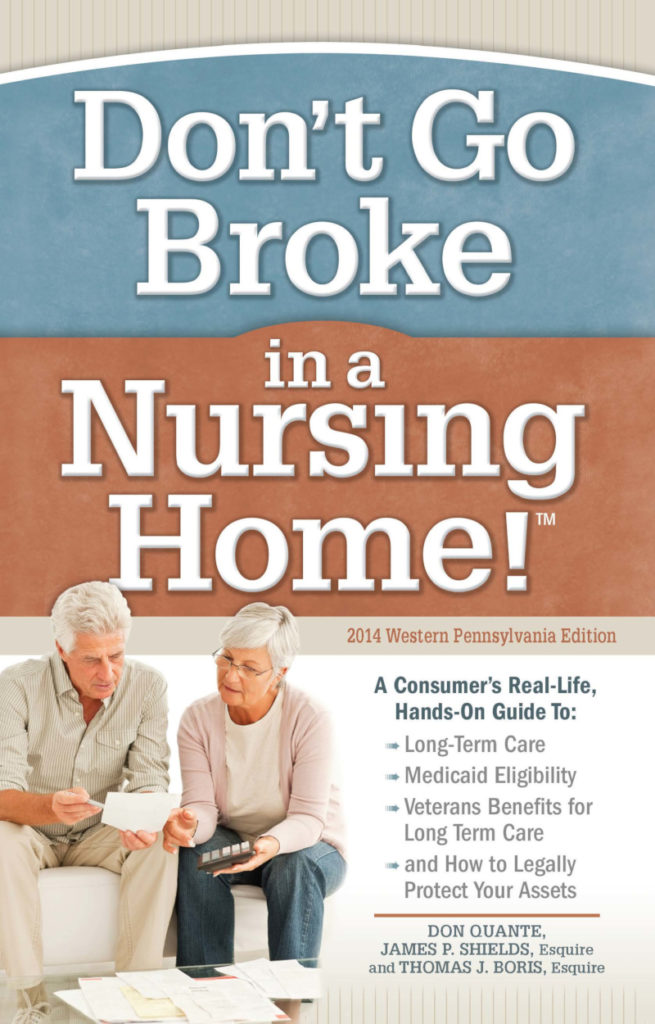
Don't Go Broke in a Nursing Home
Take back control of your life and provide excellent long-term care for your aging loved ones without going broke in the process. Find creative financial strategies to protect your assets and the quality of care you receive. In addition, learn about little-known tax incentives, how to choose the right home care providers, long-term care facilities, and how to manage the crisis.