Special Needs Estate Planning: Creating a Secure Future Without Jeopardizing Benefits
Posted on October 12, 2026 by shieldsandboris
If you have a special needs loved one, such as a child or grandchild, it is crucial that you develop a special strategy for them as part of your estate plan. You can help them secure their future without inadvertently jeopardizing their benefits. At The Elder Law Offices of Shields & Boris, we handle complex special needs estate planning matters. Our Pennsylvania special needs planning attorney can help you create a secure future for your vulnerable loved ones without jeopardizing their benefits.
Why You Want to Avoid Leaving a Large Inheritance Directly to a Special Needs Loved One
You often want to avoid, or at least proceed with caution, when leaving a significant inheritance directly to a loved one with special needs. Here is the reason why: A traditional estate plan can create serious problems when a beneficiary receives means-tested government benefits. In other words, key programs such as Supplemental Security Income (SSI) and certain forms of Medicaid/Medical Assistance impose financial eligibility requirements.
If a parent or grandparent simply leaves money or property outright to a loved one with special needs, the inherited assets may become countable resources and interfere with continued eligibility. Social Security generally treats property that an SSI recipient owns and can access for support as a resource. The same is true for Medicaid. Assets within a standard trust can also count when the beneficiary has sufficient authority to revoke the trust or obtain the property for personal use.
Proactive Special Needs Planning Offers a Real Solution
You do not have to leave a loved one who has special needs out of a Pennsylvania estate plan. Quite the contrary, you can absolutely include them. The solution is to structure the inheritance differently. Special needs planning can allow family wealth to benefit a person with a disability without simply placing substantial assets under that person's unrestricted control. The appropriate strategy depends on which benefits the person receives, the source of the money, the beneficiary's age and disability, and how the family wants the assets used.
A Third Party Trust Can Be a Highly Effective Special Needs Planning Tool
A third-party special needs trust is one of the most important planning tools for parents, grandparents, and other relatives who want to provide for a person receiving means-tested benefits. The trust is funded with assets belonging to someone other than the beneficiary. For example, parents can create a trust for an adult child with disabilities and direct part of their estate into that trust at death. The trustee then manages the assets and makes distributions under the terms of the trust. Properly drafted, the arrangement can prevent the trust principal from being treated as an available resource merely because the person with disabilities benefits from it.
A third-party trust also gives the family substantial control over long-term planning. The trust can authorize expenditures for education, transportation, technology, recreation, therapies, personal services, travel, and other needs that improve the beneficiary's quality of life. The drafting and administration still matter. Even when the trust itself is not a countable resource, certain distributions can affect SSI. Social Security explains that cash paid directly to an SSI recipient can reduce the benefit, and payments for shelter can also affect the monthly SSI amount. A knowledgeable trustee should therefore understand both the trust document and the benefit rules that apply to the beneficiary.
A First Party Special Needs Trust May Be Needed if the Assets Belong to the Beneficiary
Different rules apply when the money already belongs to the person with disabilities. That situation can arise after a personal injury settlement, an inheritance that was paid directly to the beneficiary, accumulated assets, or another financial recovery. Simply transferring those assets into an ordinary trust will not necessarily protect eligibility. Federal law provides a specific special needs trust exception under 42 U.S.C. § 1396p(d)(4)(A) for qualifying trusts funded with the disabled person's own assets. Among other requirements, the beneficiary must have been under age 65 when the trust was established, the trust must be for the beneficiary's sole benefit, and the trust must contain the required Medicaid reimbursement provision. Federal law now also permits the disabled individual to establish the trust personally.
Pennsylvania imposes additional requirements on these first-party special needs trusts. The Pennsylvania Department of Human Services states that a qualifying special needs trust funded with the beneficiary's resources must comply with federal law and 62 P.S. § 1414, remain for the beneficiary's sole benefit, and reimburse DHS after the beneficiary's death for Medical Assistance paid on the beneficiary's behalf, to the extent required by law. Pennsylvania also subjects these trusts to DHS review and approval requirements. That Medicaid payback obligation is an important distinction between a first-party trust and a properly structured third-party trust funded entirely with someone else's assets.
You May Want to Consider a PA ABLE Account as Part of the Plan
An ABLE account can provide another valuable planning option. Pennsylvania operates the PA ABLE Savings Program, which allows eligible people with disabilities to save and use money for qualified disability expenses while receiving favorable tax and benefit treatment. If you have any questions about ABLE accounts, an experienced Pennsylvania special needs planning lawyer can help.
We are Leaders in Special Needs Planning in Pennsylvania
The Elder Law Offices of Shields & Boris is a boutique law firm committed to helping people and families in Western Pennsylvania best protect their rights and their interests. If you have a vulnerable loved one with special needs, we can help you put an estate plan in place that is the right fit for their specific situation. You can provide them financial support without undermining their eligibility for SSI or Medicaid. Our Pennsylvania special needs planning attorney can help you navigate the estate planning process.
Call Our Pennsylvania Special Needs Planning Lawyer Today
At The Elder Law Offices of Shields & Boris, our Pennsylvania special needs planning attorney is a compassionate, experienced advocate for people and families. If you have any questions about special needs planning, we can help. Give us a call at (724) 286-4745 or contact us online for a completely confidential initial consultation. We provide elder law services throughout Western Pennsylvania.

A Guide to Alzheimer's Care
Planning for someone who has Alzheimer’s disease can be complicated. Proper planning in advance can help alleviate many frustrations as the disease progresses. The time to act is now. Learn the steps for proper planning from our eBook to ensure that things are handled according to your wishes and that you’ve taken the best steps possible to protect your loved ones and your family’s financial security.
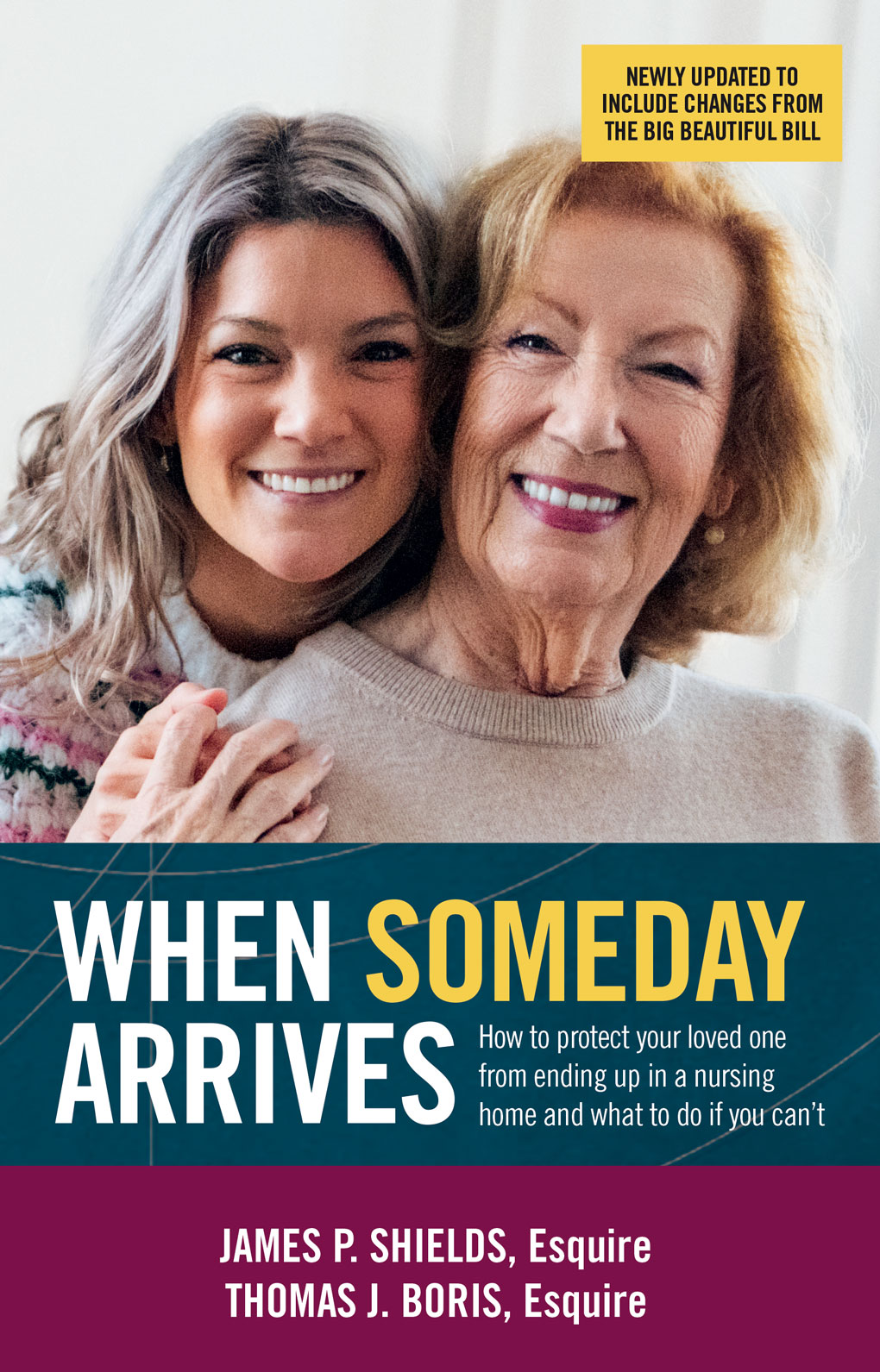
When Someday Arrives (2nd Edition)
We wrote this book for retirees and child caregivers as a tool to allow you to stay at home as long as possible and as a guide of what to do if you or a loved one cannot stay at home. We believe every family has a legacy to protect, and it is our job to protect that legacy. The greatest risk to today’s retiree is a long-term care health crisis. Request your copy today to prepare for what the future holds.

What To Do When A Loved One Dies
Consumers and financial planners, use this book as a down-to-earth primer of estate planning and elder law! Learn about the duties, rights, and responsibilities of the executor or administrator of an estate and what you should expect from competent legal counsel when you have to probate an estate. Find tools such as a guide to help you retain competent counsel and even an estate organizer so you can organize your own affairs.
Download!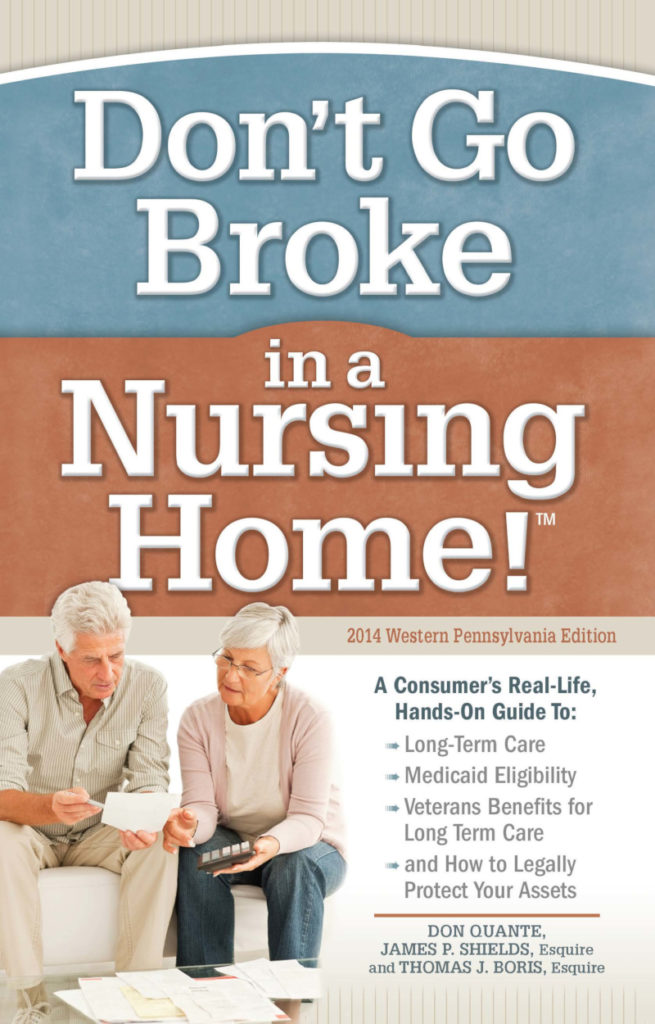
Don't Go Broke in a Nursing Home
Take back control of your life and provide excellent long-term care for your aging loved ones without going broke in the process. Find creative financial strategies to protect your assets and the quality of care you receive. In addition, learn about little-known tax incentives, how to choose the right home care providers, long-term care facilities, and how to manage the crisis.