
Planning for In-Home Care vs Facility Care: Legal and Financial Considerations
Posted on August 29, 2026 by shieldsandboris
Long-term care is expensive. In Pennsylvania, even a semi-private room in a nursing home or other assisted living facility costs over $10,000 a month on average. You and your family need a plan for long-term care. It is the best way to protect your assets from the risk. At The Elder Law Offices of Shields & Boris, we are proud to be leaders in elder law in Western Pennsylvania. Our Pennsylvania long-term care planning attorneys can tell you what you need to know about in-home care, facility care, and the legal and financial considerations.
Key Point: The Type of Care You Choose Changes What Public Benefits May Cover
The first planning issue is identifying what type of care a person actually needs. Pennsylvania does not treat a nursing facility, assisted living residence, personal care home, and care provided in a private residence as interchangeable settings.
In the Commonwealth, Medicaid can pay for qualifying nursing-facility care and can also fund certain home and community-based services (HCBS). Pennsylvania's Community HealthChoices (CHC) program provides long-term services and supports to eligible people who need a nursing-facility level of care but may receive those services either in a nursing facility or in an appropriate community setting.
Assisted living and personal care homes present a different financial issue. Pennsylvania explains that these facilities are typically privately paid and generally are not covered by Medicaid, although some residents may receive separate HCBS benefits. Families should therefore determine exactly which expenses a benefit program will cover when navigating long-term care issues.
Medicaid Planning Matters for Both In-Home Care and Nursing Facility Care
A family should not assume Medicaid planning is relevant only when someone enters a nursing home. Pennsylvania Medicaid long-term care includes both nursing-facility services and qualifying HCBS. Applicants must satisfy financial requirements as well as demonstrate a medical need for long-term care.
For 2026, Pennsylvania lists an individual income limit of $2,982 per month for the applicable 300-percent-of-the-federal-benefit-rate category. Resource limits depend on the eligibility category and income level. For example, an applicant within that income category generally has a $2,000 resource limit with an additional $6,000 resource disregard.
Long-Term Care Planning Tip: In Pennsylvania, eligibility for Medicaid coverage or long-term care is highly fact-specific. Income, bank accounts, investments, retirement accounts, real estate, life insurance, marital status, and previous asset transfers can all affect the analysis. An experienced attorney can help you and your family navigate the process, from planning to applying.
The Five-Year Medicaid Look-Back Can Apply Even if Care Is Provided at Home
One particularly important planning rule involves transfers of property. Pennsylvania reviews transfers made for less than fair market value during the 60 months preceding Medicaid long-term care eligibility. Importantly, the look-back is not limited to people entering nursing homes. Pennsylvania states that the relevant date can be either admission to an LTC facility or the date a person is assessed as eligible for HCBS and applies for Medicaid long-term care.
An improper transfer can produce a penalty period during which Medicaid will not pay for long-term care services. Giving money to children, transferring real estate, adding another person to an account, or selling property for substantially less than its value can therefore create unintended eligibility problems. If you have any specific questions or concerns about Medicaid eligibility, our Pennsylvania long-term care planning attorney can help.
More Complexity: The Home, a Community Spouse, and Estate Recovery Require Planning
The family residence often becomes one of the most important assets in long-term care planning. Pennsylvania currently excludes a home from countable resources in certain circumstances, including when its value falls within the applicable home-equity limit, and the applicant intends to return home or resides there. The home can also remain excluded when a spouse or qualifying dependent resides there. Pennsylvania lists the applicable home-value figure as $752,000 for 2026.
Married couples receive additional protections. Pennsylvania's spousal-impoverishment rules apply when one spouse enters an LTC facility or is assessed as eligible for HCBS. For 2026, the community spouse's protected resource share generally cannot be less than $32,532 or greater than $162,660, subject to the applicable calculation. The community spouse may also retain their own earnings.
Asset protection does not end with initial Medicaid eligibility. Pennsylvania's Estate Recovery Program can seek recovery after death for qualifying Medicaid long-term care payments made after age 55, including both nursing-facility and HCBS expenditures. Planning should therefore address eligibility, preservation of assets during life, and potential estate-recovery consequences.
A Comprehensive Plan Should Preserve Flexibility Between Home and Facility Care
To provide the maximum amount of legal and financial protection, a long-term care plan must be flexible. Long-term care needs can change quickly. A person who can safely remain home with several hours of daily assistance today may later require around-the-clock supervision or skilled nursing care. A sound legal plan should not depend on the assumption that one care setting will remain appropriate permanently.
For people who prefer to remain at home, Pennsylvania's CHC program can make community care financially viable in circumstances where private payment would otherwise become unsustainable. For others, nursing-facility placement may ultimately provide the level of supervision and medical support they need. A Pennsylvania elder lawyer can help you and your family evaluate all of your available options.
We are Leaders in Long-Term Care Planning in Western Pennsylvania
Long-term care is shockingly expensive. Both in-home care and facility care have the potential to quickly drain a person’s life savings without the proper planning. At The Elder Law Offices of Shields & Boris, we are proactive, solutions-focused, and committed to putting people and families first. Your initial consultation with our Pennsylvania elder lawyer is strictly confidential and carries no additional obligations.
Call Our Pennsylvania Long-Term Care Planning Attorney Today
At The Elder Law Offices of Shields & Boris, our Pennsylvania elder law attorney has extensive experience with long-term care planning. If you have any questions about in-home care, facility care, or other options, we are here to help. Give us a call at (724) 302-3718 or contact us online to arrange a strictly confidential, no-obligation initial consultation. Our firm handles long-term care planning matters throughout Western Pennsylvania.

A Guide to Alzheimer's Care
Planning for someone who has Alzheimer’s disease can be complicated. Proper planning in advance can help alleviate many frustrations as the disease progresses. The time to act is now. Learn the steps for proper planning from our eBook to ensure that things are handled according to your wishes and that you’ve taken the best steps possible to protect your loved ones and your family’s financial security.
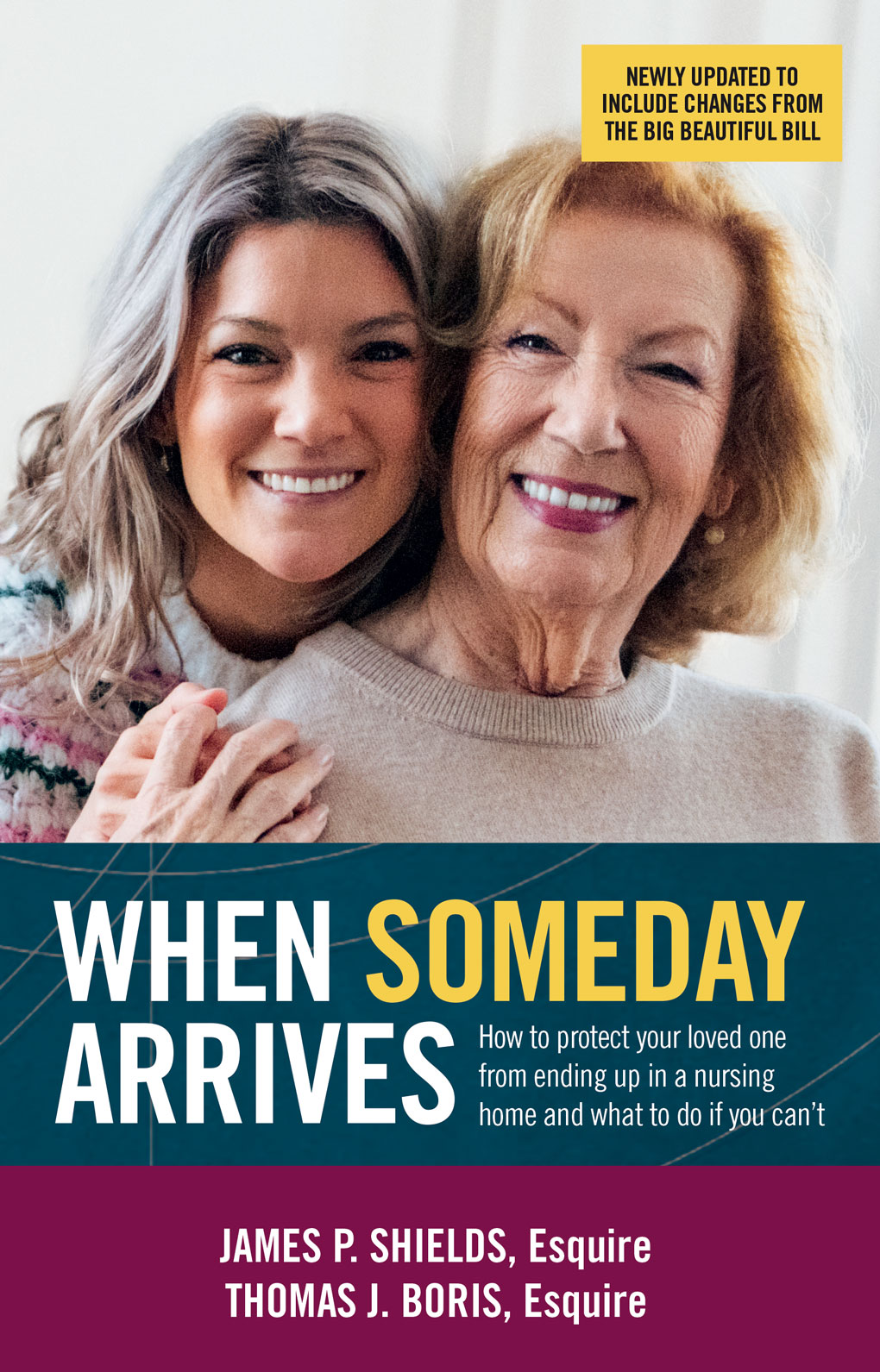
When Someday Arrives (2nd Edition)
We wrote this book for retirees and child caregivers as a tool to allow you to stay at home as long as possible and as a guide of what to do if you or a loved one cannot stay at home. We believe every family has a legacy to protect, and it is our job to protect that legacy. The greatest risk to today’s retiree is a long-term care health crisis. Request your copy today to prepare for what the future holds.

What To Do When A Loved One Dies
Consumers and financial planners, use this book as a down-to-earth primer of estate planning and elder law! Learn about the duties, rights, and responsibilities of the executor or administrator of an estate and what you should expect from competent legal counsel when you have to probate an estate. Find tools such as a guide to help you retain competent counsel and even an estate organizer so you can organize your own affairs.
Download!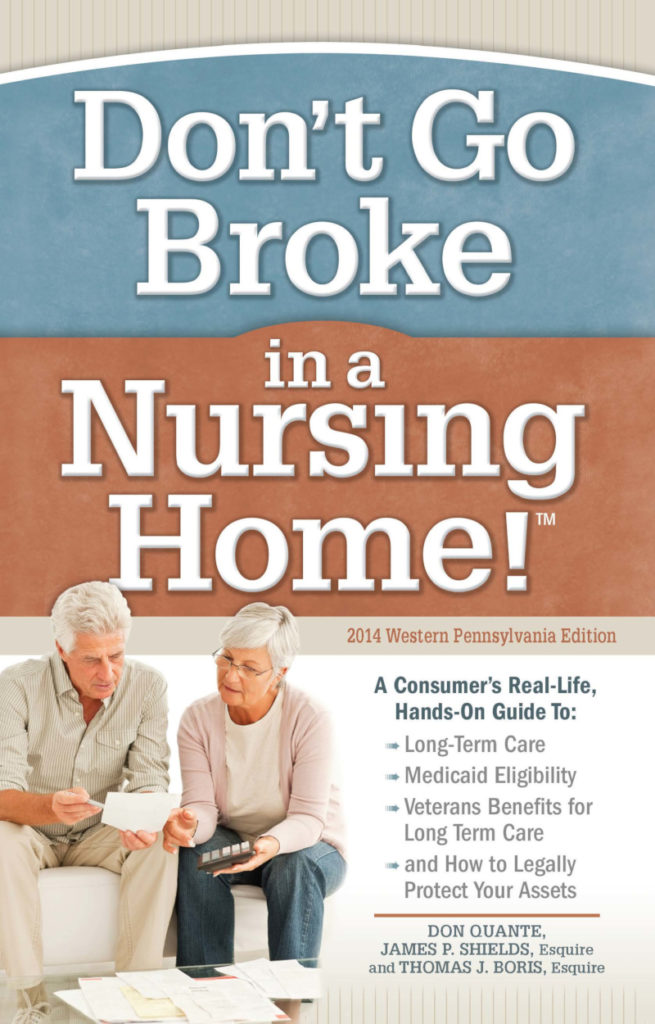
Don't Go Broke in a Nursing Home
Take back control of your life and provide excellent long-term care for your aging loved ones without going broke in the process. Find creative financial strategies to protect your assets and the quality of care you receive. In addition, learn about little-known tax incentives, how to choose the right home care providers, long-term care facilities, and how to manage the crisis.